DHS Must Release the Supplemental H-2B Visas to Prevent Processing Bottleneck at DOL
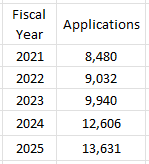
The surging demand for the H-2B program has resulted in a 60% increase in H-2B application volume to the Department of Labor (DOL) over the last five years.
Although DOL is required by regulation to issue a first action within seven days, over 85% of applications filed in FY25 for an April 1st start date did not receive a first action within this timeframe. There are many actions that could be taken to ameliorate these delays -whether that be increased Congressional funding or to reorient the filing process to only process applications that will ultimately be approved by USCIS- but, in the meantime, any and all steps should be taken to avoid duplicative efforts at DOL (processing the same applications twice).
If DHS does not release the FY26 supplemental H-2B visas prior to mid-December, this will compound the already ticking time bomb at DOL. If there had not been a FY25 first half supplemental release, most of the applications for December-March start dates would have been withdrawn and resubmitted during the April 1st filing window. The chart below shows that the later groups were not certified until late-March/early-April. If an additional 1,200 applications (representing the withdrawn applications) had been added to the April 1st submissions, the later groups would not have been certified until May.
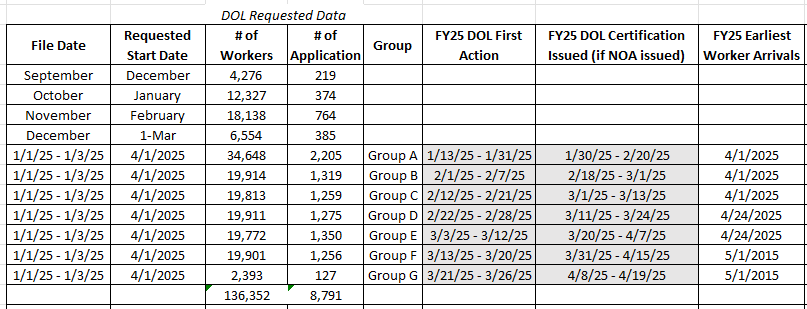
Also, employers with late spring and early summer dates of need would not have been certified until late May or June (based off DOL’s processing an average of 156 applications per day), pushing the worker arrival close to July 4th.
To prevent duplicative processing at DOL and to head off a massive processing bottleneck, DHS must publish the FY26 H-2B supplemental rule by mid-December.
Reach us in socials:


.png)

